

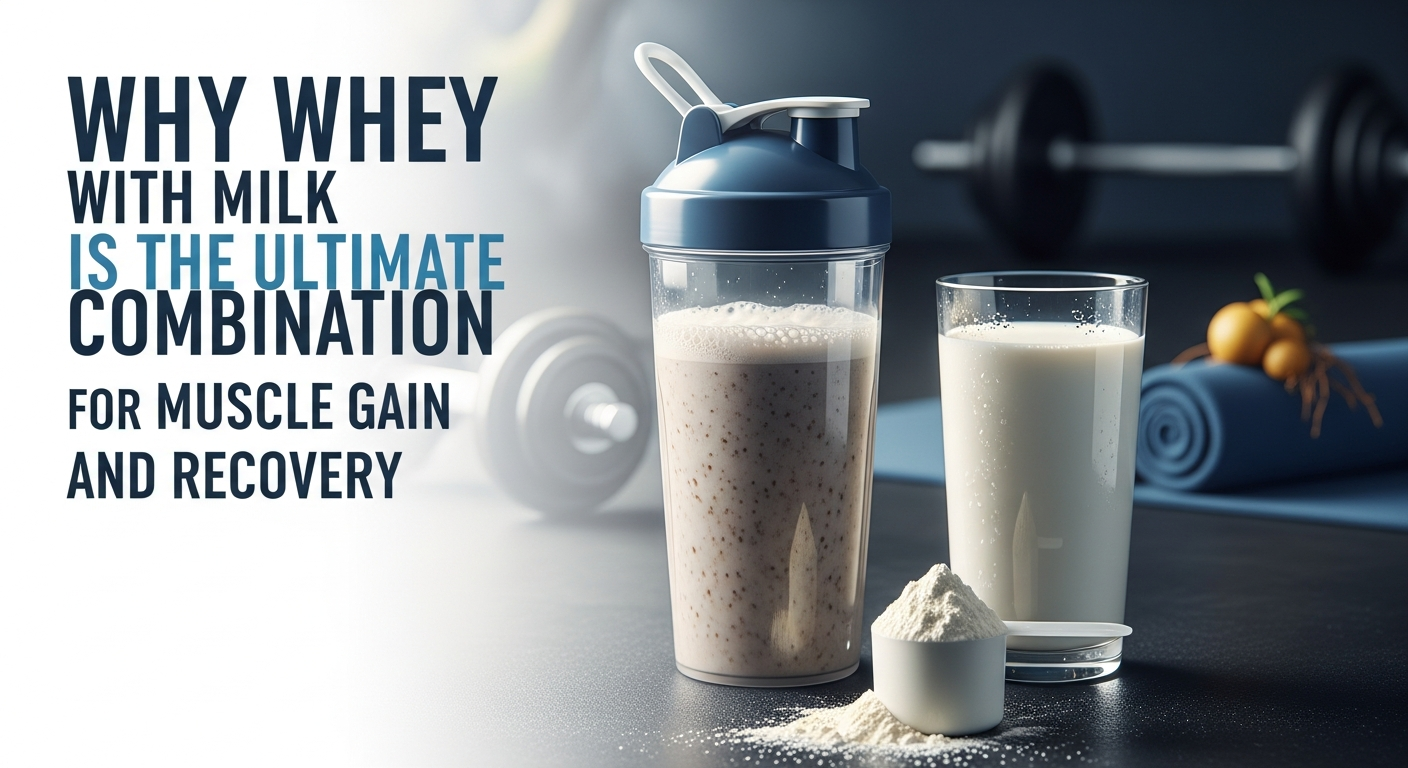
Athletes and fitness enthusiasts have relied on the combination of whey protein and milk (a good source of protein) for many years. Whey protein with milk provides several important nutrients including Protein, Calcium, Healthy Fats, and Essential Amino Acids. These nutrients are highly bioavailable, making whey protein with milk a great source of nutrition for Muscle Repair, Strength Increases, and Sustained Energy. Whether you drink a creamy, delicious Whey Protein Shake or use Whey Protein with Milk for Nighttime Recovery, each glass is a complete source of nutritional value that helps your muscles become stronger and recover faster!
Understanding Whey Protein: Basics and Benefits
Whey protein is different types of whey protein, and each type will meet the needs of people trying to build muscle (or recover from a workout), and it can also help support healthy nutrition throughout the day. The way whey protein helps support muscle building is by being easily digested, high in all nine essential amino acids, and having numerous applications to meet fitness objectives.
What Is Whey Protein and How It Works
Whey protein provides complete, high-quality nutrition derived from Milk protein isolate. All 9 essential amino acids are found in whey. The 9 EAA's cannot be produced by your body; therefore they must be consumed through diet.
- Supports muscle repair and growth.
- Provides support for stronger bones, immune systems, and more.
- Whey protein is absorbed quickly compared with many other sources of protein.
The smooth consistency and digestibility of Whey with water or milk makes the perfect supplement for individuals needing easy access to protein in their diets throughout the day.
Types of Whey and Their Key Differences
There are several types of whey protein that can be utilized according to different individual requirements and objectives.
- Whey Concentrate: The lowest quality of the three, and has the most fat and carbs; works well for those just starting whey protein supplementation and looking to improve general health.
- Whey Isolate: This type contains the least amount of carbohydrates and is nearly lactose-free. It absorbs the fastest and works best for those looking to gain lean muscle.
- Whey Hydrolysate: The protein has been pre-digested for the most rapid absorption. This is the best type of whey for athletes and those who have trouble digesting other types of proteins.
Although all three types of whey protein are considered complete proteins (they contain complete amino acid profiles), they differ slightly in the amount of lactose, how fast they absorb, and their purity levels.
Nutrition Facts and Health Benefits of Whey
Whey proteins are packed with many essential nutrients, such as:
- High-Quality Protein
- Branched Chain Amino Acids (BCAA's)
- Calcium (most notable when whey is consumed with milk)
- Vitamins and Minerals from milk-based protein products.
The benefit of these nutrients is to assist with:
- Building and repairing muscle tissue
- Supporting Healthy Body Weight
- Supporting Healthy Immune System
- Enhancing Energy Levels
- Recovering from Workouts
As a nutrient-dense food, whey with milk represents a powerhouse combination of Total Body Strength, Endurance, and Daily Performance.
The Science Behind Mixing Whey with Milk
The combination of whey protein and milk creates an extremely Nutritionally Dense Protein Shake! The beneficial factors associated with including milk into a Protein Shake include the addition of additional Protein, Healthy Fats, and Hidden Nutrients all of which provide your body the Tools to Create Lean Muscle Mass and aid in the Recovery Process After Workouts.
Why Whey with Milk Boosts Muscle Growth
Whey protein, combined with milk, creates a "perfect combination" of fast (whey) and slow (casein) digesting proteins. The rapid release of amino acids from whey gives your body the 'immediate boost' you need to Jump Start Muscle Protein Synthesis as well as The Extended Effects of the Amino Acids from the Casein Develop an Extended Recovery Process after working out.
- Improves Muscle Protein Synthesis.
- Extended Recovery Process
- Best for Building Muscle and Gaining Strength.
- Texture: The Smooth Creamy Textures of the Milk and Whey Work Amazing as Both a Meal Replacement Post-Workout and/or as a Mini Meal.
Slow-Release Protein Synergy (Whey + Casein)
- Casein is a slow-digesting protein found naturally in milk, and it provides a constant supply of amino acids for several hours when consumed.
- When whey (fast-digesting) and casein (slow-digesting) are mixed together, they create an effective combination of both whey and casein.
- The immediate recovery provided by the action of whey and the sustained muscle nourishment supplied by casein combined helps to decrease the breakdown of muscle during overnight recovery.
It also supports:
- Improvements in post-workout nutrition
- Nutrition to support muscle recovery during sleep
- Physical Fitness Program approaches that focus on muscle development
The combination of whey and casein proteins create a synergistic effect on growth and repair, making it a very powerful combination.
Absorption Rate of Whey in Milk vs. Water
- Whey protein disperses readily into solution and is absorbed quickly when the protein is mixed with water.
- When whey protein is mixed with milk, however, the rate of absorption slows down, since fat and casein also interferes with the absorption rate into the bloodstream, increasing the amount of time it takes the protein to be absorbed.
- The slower absorption rate of whey protein mixed with milk allows for extended periods of muscle growth, providing prolonged recovery from muscle development.

Comparing Whey with Milk vs. Water: Which Is Better?
Whey protein can be prepared and consumed in a number of different ways, allowing for a wide array of choices when it comes to the benefits associated with each combination—much like how multiple types of Although the most commonly used combinations are whey plus milk and whey plus water, they provide very significantly in terms of their texture, nutritional content, and how quickly they will support your body. Knowing how these two combinations differ will assist you in selecting the correct combination for your specific fitness goals, whether that is increasing muscle, controlling weight, or providing rapid recovery.
Taste, Texture & Creaminess Differences
When you mix whey protein with milk, you create a creamy, rich, and almost dessert-like shake. Milk will enhance the sweetness and thickness of your shake naturally. If you enjoy a thicker, more satisfying shake, this combination is definitely best for you.
- Creamier consistency
- Sweeter taste (even without added sugars)
- Excellent for those who enjoy a thicker shake
Conversely, when you mix your whey protein with water, you will achieve a lighter, refreshing texture. Whey protein mixed with water is very smooth and easy to mix, making it the best combination for quick post-workout beverages.
- Thinner, smoother consistency
- Less creamy, but easier to digest
- Great for use in the summer months or for quick absorption
Calorie and Nutrient Comparison (Milk vs. Water)
A shake's nutritional content is influenced not only by its variety but also by the liquid used: whether milk or water. The following table provides a quick overview:
- Whey from Milk - Higher content of Calcium, Vitamin D & Casein (for sustained muscle repair).
- Water Whey - Faster absorption, fewer calories & best for immediate recovery after workouts.
When to Choose Whey in Milk and When to Choose Water
you need to choose the proper whey base depending on your goals.
When To Use Whey With Milk:
- Great for muscle-building.
- Perfect for bulking.
- Good choice for night-time shakes (slower digesting).
- Excellent for making a thick, rich shake.
One of the reasons for choosing whey based on milk is because milk contains casein, which takes longer to digest. Therefore, casein provides a slow-release of amino acids into the bloodstream, so it can feed your muscles for many hours.
When To Use Whey With Water:
- Best for weight management.
- Best for recovery after workouts.
- A good option for low-calorie diets.
- The best option for lactose intolerant individuals.
Water-based whey has the advantage of being absorbed quickly, making it an excellent choice for helping provide protein to your muscles immediately after a workout.
Best Times to Take Whey with Milk for Optimal Results
consuming whey protein together with milk during the correct time of day will give your body the building blocks needed to build muscle, speed up recovery and ultimately improve performance. All of these benefits occur at different times of day which makes milk whey protein one of the best choices to add to your workout program.
Post-Workout: Muscle Recovery Boost
Consuming a whey protein shake after your workout gives you the benefit of fast acting whey and a more sustained release of casein protein over several hours. This allows your body to experience an immediate and longer-lasting source of protein following exercise.
- Replace AAs lost during training
- Help repair muscles and aid in recovery faster and stronger.
- Creamy texture satisfied the refueling need after high-intensity training.
How It Works:
Whey is a fast-action protein and milk adds a prolonged-acting casein to your body at the optimal time, so they complement each other.
Bedtime Shakes for Overnight Repair
Whey protein mixed with milk can help promote peaceful sleep in babies; it is recommended for adults as a potent recovery product at night after vigorous workout sessions. The slow breakdown of casein in milk creates a sustained amino acid supply throughout the entire night.
Benefits of whey protein are:
- Preventing Muscle Breakdown during Sleep
- Sustained Amino Acid Supply for 6-8 hours
- Great for Anyone Who Works Out Late in the Evening
The creaminess of the milk combined with the smoothness of the whey protein creates a comforting bedtime beverage to aid in the recovery process.
Morning Protein Intake for Sustained Energy
- Supporting Healthy Metabolism First Thing in the Morning
- Providing Extended Satiety from Milk Protein
- Preserving Muscle Mass Through a Rush Hour Morning.
The nutritional value of using milk as the delivery medium for whey protein is enhanced by adding calcium, vitamins, and healthy fats. Milk provides added nutrients to whey protein

Nutritional Value: What You Get from Combining Whey and Milk
Combining whey with milk is an excellent way to create a nutrient dense drink that is beneficial in building muscle, improving energy levels, and supporting healthy living. It combines the fast-acting protein from whey, along with casein and lactose from milk, to provide a convenient and versatile approach to fitness for fitness-minded individuals and athletes and those looking to improve their nutrition daily. Combining whey protein and milk ensures that whenever you have a shake, you're consumed with nutrition, and you'll get to enjoy shake time!
Total Protein Content in a Milk Whey Protein Shake
A whey protein shake made in conjunction with milk has a greater overall protein content than a whey protein shake mixed with water. Casein is a naturally occurring protein found in milk; thus, when combined with whey, it provides a powerful synergy that will help individuals build strong muscles.
Reasons this information is important:
- Casein provides the essential amino acids necessary for repairing muscle tissue as quickly as possible.
- Helps promote a healthy build of lean muscle.
- Provides a steady supply of amino acids for up to eight hours.
Thus, using whey in milk is ideal for post-exercise recovery and pre-sleep nutrition as well as for periods of time during the day when snacks will be far apart from each other.
Added Calcium, Vitamins & Minerals from Milk
Milk is a natural source of calcium, vitamin D, potassium, vitamin B12, and magnesium; these vitamins and minerals all act to make whey more nutritious.
The advantages of combining milk with your whey supplement include:
- improved bone and joint strength
- improved nerve and muscle support
- increased metabolic rate and energy production
- improved immune system function
A protein shake containing whey mixed with milk is not only a source of protein, but is also a source of additional nutrients which will improve your overall health and energy throughout the day. When mixed with milk, whey protein will provide you with a longer-lasting feeling of fullness due to the extra protein in milk. Whey protein mixed with milk will provide you with the energy you need throughout the day!
Better Satiety and Energy Release with Whey in Milk
Adding Milk To Whey Protein Mix Improves Satiety and Slow Sustained Energy Results
Benefits Of Adding Milk To Whey Protein Mix:
- Helps Control Your Appetite For A Longer Period Of Time
- Ideal For Individuals Who Skip Meals Or Must Have Fuel For An Extended Time
- Maintains Blood Sugar Levels Within Stable Limits
- Great For Morning Shake Or Bedtime Protein
The combination of natural fat in milk and casein (a protein found in milk), makes a creamy and satisfying whey protein shake that will be perfect for anyone looking for long-lasting energy without needing to snack frequently.
Nutrient Comparison: Whey Protein In Milk Versus Whey Protein In Water (See Table In Document)

How to Prepare the Perfect Whey Protein Shake with Milk
Combining whey protein powder with milk is one of the easiest ways to create a nutrient-dense, creamy protein shake that aids in muscle growth. The whey in combination with the milk provides a delicious way to increase the level of protein and energy available throughout the day.
Best Way to Mix Whey with Milk Smoothly
Combining whey with milk in the proper manner will help you eliminate any potential lumps and make for an extremely smooth, delicious shake every time. A smooth blend of whey and milk will help improve digestion and therefore aid in nutrient absorption.
Benefits Include:
- Creates a rich and creamy texture
- Improves mixability and reduces clumping
- Enhances flavor without added ingredients
How To Create a Super-Smooth Shake:
- Use cold milk for better blending
- Add the whey powder second to the cold milk first to prevent sticking
- Shake for 20 to 30 seconds with a shaker bottle to create a super-smooth blend
- If you would like your shake to be extra smooth, use a blender to mix the whey and milk together.
Flavor Enhancing Tips for Delicious Shakes
Milk whey protein has an infinite number of unique flavor combinations because of the endless possibilities of protein powder formulation.
Natural Flavor Boosters:
- Chocolate will be derived from cocoa powder and added into your shake.
- Mocha from instant coffee and added into your shake.
- Richness from peanut butter that can provide additional calories as well as providing a more satisfying taste.
- Warmth from cinnamon and cardamom, which can also add to the flavor profile.
- Thickening and sweetness from frozen fruits.
Why Does Milk Add Flavor?
Milk provides a natural sweetener as well as creamer, which can reduce the strong flavor of the whey so when you mix whey with milk, it's a dessert-like flavor rather than a supplement.
Ideal Milk-to-Whey Ratios for Best Results
The Ideal Ratio between Whey Protein and Milk.
your body will require a specific whey to milk ratio based upon your personal goals.
Tip- use whole milk to create a creamier shake, but whole milk will add calories to your shake. Low-fat milk will create a lighter shake and will be easier to digest.
Potential Drawbacks & Considerations When Using Whey With Milk
While whey protein shakes are healthy and beneficial for building muscle, they can also pose a challenge to some people for reasons of digestion, calorie consumption, or dairy sensitivity. Understanding these issues can help you select the appropriate form of whey protein from a milk-based source based on your goals for fitness and what's best for your body.
Lactose Intolerance & Dairy Sensitivity Issues
A common problem for many people is that they cannot digest lactose, a natural sugar found in milk. Because whey protein contains lactose, when combined with milk, it has increased levels of lactose and can cause discomfort for individuals with lactose intolerance.
The following are important points:
- Bloating and/or gas from lactose intolerance
- Stomach cramps from lactose intolerance
- Lactose intolerance is not good for anyone with lactose intolerance or dairy allergies.
- Whey isolate is a better alternative than milk whey protein and can be consumed with lactose-free milk.
Why This Is Important:
Individuals who are sensitive to dairy may have difficulty digesting milk whey protein and this could hinder their ability to perform during workouts. The use of whey isolate or plant-based milk alternatives can help lessen any discomfort.
Higher Calories for Those on Weight-Loss Diets
Milk naturally contains additional calories, fats, and sugars when added to your shake than water would. Therefore, whey protein mixed into milk is a better option for people aiming to gain muscle than for those trying to stay within their caloric limit.
The following are some key points regarding milk being added to your whey protein:
- Each shake with milk will add an additional 80-150 calories.
- The addition of milk will also increase the carbohydrate and fat content of the drink.
- If calories are not tracked, drinking whey with milk may hinder weight-loss progress.
What To Consider:
If your objective is to lose fat and you are consuming whey protein with milk on a daily basis, you may be consuming more calories than what your body can handle to stay within your goal of consuming a specific number of calories daily. If you choose to use water as your base for your whey protein shake then you are able to create a shake that is lower in calories and better suited for fat loss.
Digestion Concerns for Sensitive Stomachs
Some people find that the combination of whey and milk can be difficult to digest, particularly in the post-workout phase when the stomach is most sensitive.
The key points regarding the issue of difficulty digesting whey mixed with milk:
- Due to the thicker consistency of the drink this may cause you to feel full after vigorous physical activity.
- The milk fat in the drink may be a cause of slower digestion; thus causing discomfort if the drink is consumed quickly.
- Water-based whey or smaller sized portions may be a better option for those with a very sensitive digestive tract.
In conclusion, a comparison table and recommendations for who should mix whey with milk and who should avoid it will follow this section to summarize the above discussion.

FAQs
Q1. Is whey with milk good for muscle gain?
Mixing whey with milk increases protein, calories and casein in whey; thus it is beneficial for faster muscle building and strength development.
Q2. Does mixing whey in milk slow down absorption?
Milk does cause a slight delay in digestion, but as a result, it will also give you a more sustained release of amino acids for a longer period of time for muscle recovery.
Q3. How much milk should I use with whey protein?
The use of 200-250ml of milk assists in creating a nice creamy and smooth textured shake.
Q4. Is milk whey protein good before bed?
Yes, both casein and whey that are contained in milk aid overnight muscle recovery and decrease night-time breakdown of muscle.
Q5. Can people with lactose intolerance take whey with milk?
Only if you can tolerate it. If not, then using a lactose-free product will alleviate any stomach distress that you may experience.
Conclusion: Make the Most of Your Fitness Journey by Choosing Whey with Milk Today!
Whey protein mixed with milk is one of the strongest additions you can make to your everyday regimen. The combination of these two products provides high-quality protein, calcium, and other key micronutrients necessary for muscle growth and recovery. The gradual release of the amino acids helps to maintain energy levels for a longer period of time and enhances recovery of the muscles.
If you're looking to add more muscle mass, improve your strength, or simply improve your overall diet, whey protein with milk provides a delicious, nutritious, and full-flavored shake, which meets all of your dietary and fitness needs. When you incorporate this easy addition into your daily life, you will find that every drink gets you closer to being a healthier and stronger individual!


 +91 63528 07487

 225, Orchid Plaza, Sama-Savli Rd,
behind mc donald's, Vemali,
Vadodara, Gujarat, India 390008
225, Orchid Plaza, Sama-Savli Rd,
behind mc donald's, Vemali,
Vadodara, Gujarat, India 390008