

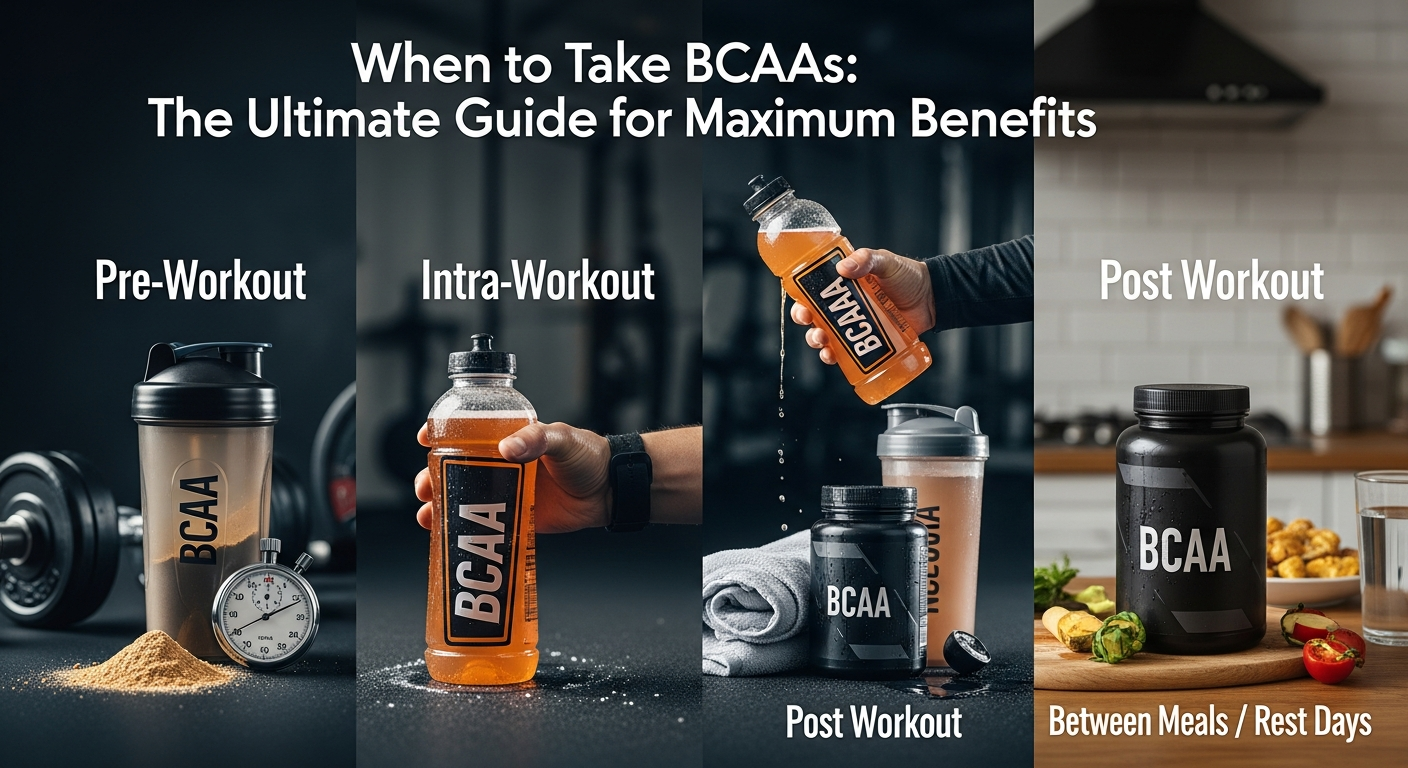
BCAAs are amino acids that are quickly absorbed by the body, and provide an important role in the development and maintenance of muscle strength, recovery, and exercise performance. BCAAs consist of three essential amino acids known as Leucine, Isoleucine, and Valine. These three nutrients have been shown to help protect muscles from breakdown, promote energy production, and promote faster recovery after exercise.BCAAs can be easily absorbed by the body and work best when consumed at the proper time, making them ideal for those who engage in regular exercise activities. Every dose of BCAAs provides pre-workout energy support, intra-workout endurance support, post-workout recovery support, and muscle support on days off from training, when consumed at the right time!
Understanding BCAAs: What Are They and Why Are They Important?
BCAAs are important for overall health, recovery, and athletic performance. BCAA is an important nutrient to promote muscle health, and they are quickly absorbed by the body to provide an immediate source of energy to the working muscles. Knowing how, why and when to consume BCAA is necessary to get the most out of these products. Below is an image showing the two types of BCAA, their names, and the areas where they will be affecting an athlete's recovery and performance.
What Are Branched-Chain Amino Acids (BCAAs)?
BCAAs are an essential source of nitrogen to the body and must be obtained from food or supplements.
The BCAAs are actually utilized by the skeletal muscle as a source of Energy and Repair.
- Whereas many amino acids are metabolized in the liver, the bcaa's are metabolized by the working muscle itself.
- Thus, BCAA can be utilized by the body immediately after they have been taken. This is why so many athletes and fitness enthusiasts have embraced BCAA to assist in their endurance and recovery.
Characteristics of BCAAs:
- Chemicals that the body cannot produce
- The quickest source of energy for working muscles
- Can increase endurance, recovery and muscle performance before, during and after physical activity.
Why BCAAs Are Essential for Muscle Recovery
- BCAA supplementation helps repair damaged muscle fibers and support the muscle building process after your workouts.
- BCAAs help you decrease muscle breakdown, minimize soreness, and recover more quickly from an exercise session.
- Taking BCAAs when you should (when to take BCAA supplements) will ensure you use BCAAs to stimulate your body's production of muscle protein.
Some benefits of taking BCAAs after intense training, prolonged cardiovascular exercise, and/or resistance training are:
- Reduced likelihood to experience delayed-onset muscle soreness (DOMS).
- Maintained protection of your lean muscle during a calorie-deficit.
- Accelerated recovery in between workout sessions due to reduced time spent recovering.

Leucine, Isoleucine, and Valine: How They Work
There are three specific amino acids found in BCAAs (Leucine, Isoleucine, Valine), and each has a different, but equally impactful, way of helping your muscular system perform optimally through the combined effect of all three amino acids.If you take BCAAs at the right time, they will help to support your body's energy production during exercise, enhance your endurance levels throughout your exercise performance, and aid in muscular recovery after your workout.
- Leucine is vital to initiating the process of muscle protein synthesis, therefore responsible for repairing damaged muscle tissue.
- Isoleucine is crucial for producing energy and enhances your endurance while exercising.
- Valine helps to improve coordination and decreases feelings of fatigue during exercise.
The Science Behind BCAA Timing: Does It Really Matter?
Just as a baby's diet at a certain age helps it grow, training will assist the muscles to use the BCAAs taken. The science of timing makes it easy for you to determine the best time to consume BCAAs based on your individual fitness goals.
How BCAAs Are Absorbed in the Body
- Because BCAAs do not pass through the liver's digestive system to be processed, they can be absorbed into the bloodstream rapidly. When you consume BCAAs, they reach the bloodstream very rapidly; therefore, the body uses BCAAs as energy or repairs muscle immediately.
- BCAAs are absorbed very rapidly, and that is why they are effective when consumed before, during, and after workouts.
- Because BCAAs are used directly by the muscles, it is critical to consume BCAAs close to physical activity to ensure that the muscles have access to the amino acids when they need them most.
Why Timing Impacts Muscle Protein Synthesis
- Muscle growth occurs when exercise has damaged the fibres of the muscle, thus triggering a series of events that lead to a stronger muscle through muscle protein synthesis. A major trigger for muscle protein synthesis is leucine, which is one of the three branching chain amino acids (BCAAs).
- By taking BCAAs around your workouts, you will maintain a more positive balance of muscle protein synthesis compared to if you were to take them after or in between workouts. In addition, if you take them too late or take them at an inconsistent time, your body may enter a state of muscle breakdown rather than recovery.
- As a result, many athletes will ask questions about BCAAs; for instance, "When should I take BCAAs to help me recover faster?" and "What will I gain if I take them after working out?"
Key Timing Benefits of BCAAs:
- Before Workout: To aid in the prevention of muscle breakdown
- During Workout: To maintain muscular endurance and decrease fatigue
- After Workout: To speed up recovery from exercise and promote growth of new muscle fibres
Pre-Workout vs Post-Workout BCAAs: What Research Says
There is scientific evidence to support the use of pre and post workout supplemental BCAA. However, the evidence shows supplementation with BCAAs during workouts are more useful for decreasing muscle injury and improving endurance; while post workout BCAAs are better suited for recovery and muscle repair

Pre-Workout: Should You Take BCAAs Before Exercising?
A common practice employed by athletes and fitness experts is to take BCAAs prior to beginning their workout sessions. This approach provides your muscles with the necessary preconditioning to prepare them for the stress that will be placed on them throughout the course of the workout, maintains an adequate level of energy and minimizes the likelihood that you will experience any type of muscle breakdown while performing strenuous workout routines. Knowing when to consume BCAAs prior to working out can enable you to train with greater intensity, as well as enable you to recover faster from your workouts.
Benefits of Taking BCAAs Before a Workout
- By taking BCAAs prior to performing a workout session, you are supplying your body with the essential amino acids that your muscles will need at that very moment.
- Having access to these amino acids early on allows you to activate muscle protein synthesis and prepare your muscle fibres for resistance (weight-lifting) training and endurance-based exercises.
- Pre-workout consumption of BCAAs is particularly advantageous when you are fasting or consuming fewer calories than usual.
Key Benefits:
- Prepare your muscles for training.
- Enhances the consistency of your workouts.
- Reduces soreness associated with early workouts for novice lifters.
Energy Boost and Fatigue Reduction
- Exercise can delay the onset of fatigue because of BCAAs. This allows you to stay more focused during your workout, train longer with higher levels of endurance and not experience much early fatigue as you would without BCAAs.
- If you're wondering when to take BCAAs for energy, the ideal time is to take them 15-30 minutes before your workout.

Preventing Muscle Breakdown During Training
Another great advantage of taking BCAAs before a workout is the prevention of muscle tissue breakdown. It is common to use muscle tissue for energy when doing prolonged or strenuous exercise; however, using BCAAs can help to prevent this from occurring. This is especially important for individuals who are in a cutting phase, participating in a cardio-dominant training program or for those who are training while fasting.
Here are a few other benefits of taking BCAAs prior to a workout:
- Decrease in muscle catabolism
- Maintaining of lean muscle
- Enhancement of post-exercise recovery prior to the completion of the exercise session.
During Your Workout: The Benefits of Intra-Workout BCAA Supplementation
The use of Intra-Workout BCAA is one of the best ways to maintain an optimal level of performance, endurance, and muscle protection while working out. The supply of amino acids remains consistent throughout your workout so that your muscles will remain strong enough, even if you are training with them continuously for an extended period, to continue your training session and to recover from your workout more quickly. For many athletes and avid gym-goers, the right timing for supplementation addresses the most frequently asked question, "When should I take BCAA to benefit from it during my workout?"
How BCAAs Support Endurance During Exercise
BCAAs give working muscles immediate energy whenever they are being worked out very hard or very long. This is especially true during long workouts (endurance), high-intensity intervals (HIIT), and extended, tiring workouts at the gym or on the track.
Key Benefits of Intra-Workout BCAA for Endurance in Fitness / Conditioning
- Maintain Energy Levels During Your Workout
- Provide Extra Gas on Your Engine for Longer WorkoutsAllow for Continued Consistent Performance from Beginning to End
Reducing Muscle Fatigue Mid-Workout
During exercise sessions, as time goes by, muscle fatigue increases due to decreased energy, and the continual strain being put onto your muscle fibers. Consuming BCAAs while you are still exercising, helps to decrease the rate at which your muscles will break down as well as provide a source of fuel for your muscles during their workout.
Understanding Why BCAA's Will Help Your Muscle Fatigue:
- BCAAs keep your muscles from breaking down
- BCAAs allow your muscles to continue to contract
- BCAAs decrease the amount of early muscle fatigue experienced in the early stages of your sets

Hydration and Performance Benefits of Intra-Workout BCAAs
Most BCAAs come as a powdered form which is normally mixed with water. Using these powders in conjunction with water, the more water you will consume and also be staying adequately hydrated. Staying hydrated in conjunction with amino acids, will help to maintain the function of your muscles and focus of your mind. Therefore, using BCAA powders during long, hot training sessions, or during lengthy cardio workouts, will provide added nutrition and provide an increased benefit over the long-term.
Why Hydration + Performance Benefits:
- Encourages you to drink water before, during and after your workouts
- Maintains the balance of electrolytes within your body (when mixed with other minerals)
- Increased focus and productivity while exercising
For most athletes, taking BCAAs intra-workout represents the best use of BCAAs because it provides support for when your body requires it most and in the greatest quantity.
Post-Workout: Is Taking BCAAs After Exercise Better for Recovery?
Muscle soreness, fatigue and nutrient loss following exercise are all signs of damage to muscle cells from intensive training programs. Supplementing with BCAA’s immediately following a workout provides the body with an excellent source of nutrition for recovery, as they are rapidly absorbed and delivered directly to muscle tissue.
Muscle Repair and Recovery After Training
- After training, your muscles are fatigued, stressed and depleted of nutrients. By supplying BCAA's immediately after exercise, you are supplying the body with essential amino acids to commence the muscle repair process faster.
- In particular, Leucine stimulates muscle protein synthesis. Thus, damaged muscle fibers are repaired and rebuilt stronger and more effectively.
- BCAA’s also shorten your recovery time between workouts and allow you to be more consistent with your training routine.
Reducing Delayed Onset Muscle Soreness (DOMS)
- DOMS is the technical name for the pain you feel two days after you did resistance training and affects how well you perform as well as your motivation to keep going.
- BCAAs taken after a workout may decrease muscle inflammation and limit muscle fibers' total injury, which will result in less soreness and make it easier for you to move, stretch, and train again.
- For most athletes, the answer to the question of how soon after your training you should take BCAAs to decrease muscle soreness is “as soon as possible.”

Supporting Muscle Growth with Post-Workout BCAAs
- In order to develop muscle, you have to recover after your workout rather than during it. Therefore, by providing your body with the amino acids it needs to enter into a muscle-building condition/recovery, by taking BCAAs after exercising, you are providing your body with everything it will need to build muscle.
- Furthermore, post-workout BCAAs enhance the absorption of nutrients when consumed after a protein-rich meal or shake.
- Therefore, if the goal of your training is to develop or recover from muscle mass, you should consider taking post-workout BCAAs.
BCAAs on Rest Days: Should You Supplement Even When Not Training?
Even on your rest days when you are not training, your body is still regenerating and repairing muscle tissue. BCAAs may assist with these processes by preventing lean muscle tissue from breaking down, alleviating soreness, and maintaining a balanced level of amino acids in the body. Knowing when to take BCAAs will improve recovery and help you remain dedicated toward your fitness goals regardless of what day you are on.
Muscle Preservation on Non-Training Days
- Muscle breakdown can occur on non-training days, particularly if you are following a very low calorie (undernourished) diet or have been doing excessive amounts of physical activity.
- BCAAs provide your body with numerous essential amino acids that cannot be manufactured on their own. This type of supplementation is extremely beneficial for individuals who are competing, trying to lose weight, or training at a high frequency several times each week.
- Supplementing with BCAAs during the time you are resting will ensure that your muscles continue to be protected, supported and ready for the next workout session.
Key Benefits:
- Protein breakdown will be reduced.
- Lean muscle tissue will be able to be maintained.
- BCAAs should be taken during the fat-loss phase of your program.
Maintaining Amino Acid Levels During Recovery
- Recovery through BCAA keeps steady levels of amino acids fed into your body, thus facilitating repair of muscle damage during the physical demands of the exercise;
- BCAA decreases discomfort of sore muscle (DOMS) through faster repair capabilities of your body.
- Incorporating BCAA into your diet on your day(s) off will help you to continuously supply your body with the nutrients necessary to promote strong repair of muscle tissues.

When Should You Take BCAA on Rest Days?
For optimal recovery through BCAA supplementation, it is best to consume your BCAAs:
- Morning (or early if you tend to train on an empty stomach)
- Between meals
- Before bedtime (as sleeping supports the body's ability to recover)
Remember, consistency of usage supports the body's ability to recover both while in training and while resting.
How Much and How Often? Dosage Guidelines for Effective Results
BCAA supplements are most effective when consumed in the appropriate quantity and frequency for optimal performance and results. Timing plays an important role in both your performance and recovery periods; therefore, knowing how much to consume will allow you to receive the most out of your BCAAs without consuming more than necessary. New users and seasoned athletes alike can benefit from this simple guideline by determining when they should be taking their BCAAs in order to meet their own personal goals.
Recommended Daily Intake of BCAAs
The daily recommended intake of BCAAs will differ depending on the type of activity you do, how intense your workout was, and what your overall fitness goal is. For a fairly active person who does light physical activity, moderate BCAA consumption will allow for muscle recovery, endurance, and strength without overloading their system.
- General Fitness, Minimal Training - 3 to 5 grams of BCAAs per day
- Regular Training and Gym Attendance - 5 to ten grams of BCAA per day
- High-Intensity Training or Endurance - Up to 15 Grams of BCAA per day
Distributing your total intake throughout each day will also increase the effectiveness and credibility of the way the amino acids are absorbed into your body before and during recovery, when it matters the most.

Safe Dosage for Beginners and Athletes
- Beginners should start with a lower dose and gradually increase as their bodies adjust to the supplement. This is to prevent any discomfort in the gastrointestinal tract caused by initial use, as well as to give their bodies time to adapt to BCAAs.
- Athletes will likely require a higher dosage than beginners because they experience greater stresses on their muscles during training and therefore will need greater recovery than someone beginning to use BCAAs.
- To be safe for athletes, BCAA supplements should be taken at the recommended dosages, provided that hydration is sufficient to support muscle growth and repair.
Recommendations to follow when taking BCAAs:
- Beginners should begin at 3-5 grams and then slowly increase the dosage according to the intensity of workout sessions.
- Drink plenty of water while using this supplement to stay hydrated.
- Do not take higher amounts of BCAAs from different products at the same time, as this would be considered stacking.
How Often Should You Take BCAAs for Best Results?
- How frequently you should use BCAAs will depend on how often you train and how quickly you recover from training. Generally, most individuals will find that they will achieve the best results by using BCAAs in conjunction with their training days, either before, during or after their workouts;
- However, trained athletes may split the dosages throughout their workouts.
- On training days, you may benefit from pre-, intra-, post-, or fasted training; on rest days, just once to prevent muscle wasting.
- Knowing when to take your BCAA will allow you to better schedule supplementation with the muscle building cycle and energy expenditure. For maximum results, consistency with the intake of BCAA is more important than precise timing.
Common Myths & Mistakes About When to Take BCAAs
BCAAs are easy to incorporate into your supplement routine, but some people struggle with when, how much, and how to combine them for maximum effectiveness. Many myths about BCAAs lead to confusion and lack of full benefit from their supplementation. When you understand the actual factors that influence when to consume BCAAs, the dose that is most beneficial, and the way to pair BCAAs together effectively, you will be able to maximize the benefits of BCAAs for you personally.
Is There One “Best” Time to Take BCAAs?
A very common misconception about BCAAs is that there is one time that is the best way to take BCAAs. The truth is that this depends on why you are using BCAAs in the first place, whether for energy, endurance, or recovery.
- Pre-workout BCAAs provide energy and protection for muscle tissue during workouts
- Intra-workout BCAAs reduce fatigue and increase endurance during workouts.
- Post-workout BCAAs support recovery and repair of muscle tissue after workouts.
As such, when should you take BCAAs? The flexibility of choice based on your training plan makes it difficult to answer that question with a generic response; therefore, to maximize your BCAA intake, consider how you will be using them rather than trying to conform to a predetermined time schedule.
Can You Take Too Much BCAA?
- It is important to note that taking excessive amounts of BCAA will not yield the best results and may cause gastrointestinal distress and/or put additional stress on your body
- Most athletes can achieve the best effect from taking 5-15 grams of BCAA daily based upon their level of activity; exceeding this amount will not cause an increase in muscle mass and will likely result in an imbalance in amino acids.

Combining BCAAs With Protein Supplements Correctly
Many individuals believe that they do not need to take BCAA with protein, but this is not the case; BCAA offers a quick source of amino acids whereas protein provides complete nutrition.
When BCAA and protein are taken together, they will be most effective as a team:
- amino acids from BCAA will be used for immediate energy during workouts
- Protein is important for the long-term rebuilding of muscle tissue.
Therefore, do not think that you must replace protein with BCAA. Rather, BCAA should be taken around workouts and protein should be consumed with meals or immediately after your workout.
Proper BCAA Usage:
- BCAA: before/ during workouts or immediately after workouts.
- Protein: Post workout with meals or for your daily nutrition requirements.
FAQs:
Q1. When should you take BCAA for best results?
You can take BCAAs before, during, or after workouts depending on whether your goal is energy, endurance, or recovery.
Q2. Is it better to take BCAAs before or after a workout?
Both are effective—before workouts for energy and muscle protection, after workouts for faster recovery.
Q3. Can I take BCAAs during my workout?
Yes, taking BCAAs during your workout helps reduce fatigue and improve endurance.
Q4. Should I take BCAAs on rest days?
Yes, BCAAs on rest days help preserve muscle and support ongoing recovery.
Q5. How many grams of BCAA should I take daily?
Most people benefit from 5–15 grams per day, depending on activity level and training intensity.
Conclusion: Unlock the Full Potential of Your Training by Knowing When to Take BCAAs
BCAAs have different benefits depending on when taken: taking before exercise can enhance energy levels; taking during exercise can help extend endurance; taking after exercise can help repair muscle damage and expedite muscle recovery following strenuous exercise. Take BCAAs on rest days as well to maintain lean muscle mass and continue the recovery process. Align bcaa supplementation with your training schedule and goals for optimal use of these amino acids.
Once you comprehend when to use bcaa, you train intelligently and create a more time-efficient recovery process so you can continue to achieve optimal outcomes over the long term.


 +91 63528 07487

 225, Orchid Plaza, Sama-Savli Rd,
behind mc donald's, Vemali,
Vadodara, Gujarat, India 390008
225, Orchid Plaza, Sama-Savli Rd,
behind mc donald's, Vemali,
Vadodara, Gujarat, India 390008