


Pre workout supplements have developed a unique niche in the world of fitness by allowing gym-goers to optimize their workouts and performance. To give an example, while millet has been a mainstay in Indian kitchens for generations, the history of pre workout can be described as slowly developing into a performance staple.
Pre workouts did not always exist in colorful form of powder we now see on the shelves. Rather, the first pre workouts were raw-based powders or pills that primarily consisted of a collection of various stimulants to provide immediate energy. As awareness of exercise nutrition has spread, performance science has grown, and athlete demands for cleaner formulations have increased, the sport nutrition market is shifting away from these stereotypes into cleaner and highly personalized options.
From stimulant-laden mixtures back in the early days of bodybuilding, to thoughtful, goal-oriented stacks we have today, how long has pre workout been around indicates a more meaningful story of evolution in sports nutrition. This progression provides user to make better judgement or decision making on products that suite them, honouring the origin of supplement science, and ultimately we can make better use of with modern day product formulations for subsequent benefits.
Introduction: Why the History of Pre Workout Matters
The story of pre workout supplements mirrors the evolution of modern fitness culture. The history of pre workout reflects how performance nutrition has matured over time. What began as a niche supplement for elite athletes has now become a mainstream fitness essential. Understanding where it all started and how it has changed can help fitness enthusiasts make better-informed choices for their health and goals.
How Long Has Pre Workout Been Around in Fitness Culture?
Pre workout supplements began more than three decades ago in the 1980s with the appearance of the first pre workout blends in underground bodybuilding scenes. These early pre workout formulations were quite basic, usually just a mix of caffeine and sugar or other stimulants for a quick energy burst.
- 1980–1990s: Emerged in underground bodybuilding scene
- 2000s: Higher acceptance in the broader market & commercialization of the product
- 2010s–Now: Science-based, safer, and customizable formulations.
So when we ask, how long has pre workout been around, it is clear the actual pre workout we know today has over thirty years of legacy and learning behind it.
Why Understanding the History Helps in Smarter Supplement Choices
Knowing what has happened in the history of pre workout will help you to avoid making some of the mistakes that have been made before. For example, ahead of that initial wave of pre workout products, many of the early companies built their products around high stimulant doses which caused side effects such as jitters, crashes, bathroom emergencies, and sleeplessness. Recognizing these mistakes allows today's consumer to:
Choose clean-label, scientifically credible products
- Prioritize ingredient disclosure
- Avoid proprietary blends that hide dosing
When you know what has gone wrong in the past, you are set up to select what is right for you now.
The Evolution from Energy Boosters to Performance-Focused Blends
The original pre workout formulas were mostly about quick stimulation. But, over time, the formulations shifted focus. Today's supplements are designed not just to stimulate energy, but for endurance, strength, focus, and recovery.
- Original blends: Caffeine and sugar energy spikes.
- Middle phase: Added creatine, and nitric oxide boosters.
- Now: Holistic formulas with adaptogens, nootropics, and the inclusion of amino acids.
This progression of energy enhancers to all encompassing performance blends reflects how far the supplement world has come, and the importance of keeping up with what that means to your success in fitness.
The Birth of the First Pre Workout: Where It All Started

To grasp the full evolution of how today’s supplements are fueling workouts all over the world, it’s important to take a step back and explore the history of pre workout. The history of pre workout begins with a simple need: to train harder, longer, and with more focus. Before the age of modern science, fitness-fanatics turned to basic combinations of sugars and stimulants to promote that burst of energy. This was the humble beginning of a quick evolution of the industry.
The First Pre Workout Formulas and Their Purpose
The first pre workout supplement products found their home in the marketplace during the 1980s, primarily attracting bodybuilders and elite strength athletes. The primary goal of early pre workouts was to provide a quick burst of energy in advance of taxing physical exertion. These supplements were not intended to enhance endurance, improve focus, or aid in recovery; the objective was to increase adrenaline and a heart rate increase.
Basic blends designed for immediate stimulation
- No scientific evidence or regard for long-term health impacts
- Only product form being consumed in any format without standardized dose
Early pre workouts were fast and simple to use but crude and basic, yet effective for short time performance upgrade.
Early Ingredients: Caffeine, Sugar, and Stimulants
Caffeine was a main ingredient in early pre workouts, generally combined with a lot of sugar and sometimes strange stimulants like ephedra (often making it questionable!). These ingredients offered a hit of energy sooner than any other form of fueling, however the combination and lack of regulation caused potential concerns because of the amounts of caffeine, sugar or any over-stimulated doses.
- Caffeine: Provided the base energy hit
- Sugar: Faster glucose in in the muscle but crashing post workout
- Ephedra & friends: Strengthened the kick, but brought health complications and was banned
As we look back at the journey of pre workout, the early recipes were informative in what not to do.
Who Used Pre Workouts in the Early Days—Athletes and Bodybuilders
Initially, pre workout was largely limited to the bodybuilding community. Bodybuilders were looking to maximize gains in size, strength and performance, and would consider any supplement that had even a chance of providing an edge. The bodybuilder crowd was still quite different from the greater fitness community, which began with the niche audience that often saw pre workouts as very extreme products.
- Bodybuilders were looking to push for high intensity sets
- Powerlifters were looking for peak strength output
- Endurance athletes were largely not interested in peak performance pre workout caffeine products, looking at them only for worry of crashing.
Understanding how long pre workout has existed, its interesting to see how its user base only really grew with safer, more refined products coming on to the market.
How Long Has Pre Workout Been Around? Tracing the Timeline

It's important to take into account pre-workout's multi-decade evolution from a specialized remedy to a fitness necessity when estimating how long it has been used. The history of pre-workout has been marked by innovation, athlete-driven experimentation, and shifting consumer awareness. The evolution of pre-workout supplements, from their early, stimulant-heavy varieties to their more modern, health-conscious blends, reflects broader changes in the fitness industry.
1980s–1990s: The Underground Popularity in Bodybuilding Circles
The history of pre-workout in the 1980s and 1990s was influenced by its underground status. Bodybuilders and professional athletes had already shown a keen interest in pre-workout supplements, despite the fact that they were not yet generally accessible. Through word-of-mouth recommendations and experimentation in gyms, these formulas became popular among close-knit fitness communities. These early blends, often prepared at home or bought from small supplement stores, contained strong stimulants, caffeine, and substances high in sugar.
Key points from this era:
- Pre-workout was only used by devoted gym patrons.
- In early formulas, energy was prioritized over safety and side effects.
- Although ephedra-containing blends became more popular, they had serious negative health effects.
2000s: The Boom of Commercial Supplement Brands
The early 2000s marked a turning point in the history of pre workout. As fitness became more mainstream and commercial supplement companies began to thrive, pre workout formulas were standardized, marketed, and widely distributed.
- Major brands began releasing signature blends with labeled ingredients
- Products were designed for mass-market appeal—flavors, branding, and performance
- Controversial ingredients like DMAA gained popularity and later faced bans
- Fitness magazines and events drove marketing to new audiences
The first pre workout formulas were no longer underground—they were available in every supplement store.
2010s–Now: Safer, Cleaner, and More Personalized Formulas
From 2010 onwards, the supplement industry witnessed a strong push toward transparency and health-focused ingredients. Consumers became smarter, and brands responded with cleaner labels and goal-specific formulas.
- Rise of stimulant-free and vegan-friendly options
- Introduction of clinically dosed ingredients like beta-alanine, creatine, and citrulline
- Personalized formulas for energy, focus, endurance, and recovery
- Focus shifted to long-term performance and health, not just short-term energy
Today, when you explore the history of pre workout, you see a clear shift—from intense and risky to informed and tailored. The journey from the first pre workout to modern-day stacks reflects the evolving priorities of fitness enthusiasts everywhere.
Ingredients Through the Ages: Then vs Now

If we follow the historical arc of pre workout, one of the most interesting distinctions lies in the elements it has used. The early days were driven by crazy stimulants, and now we have a comprehensive understanding of the science decorated with zeroes like: Hydration, ATP, CHO’s, protein, Leucine, etc. A dispensation of trials, errors, finding a new combination, launching it, then another dispensation of discovery and enhancements that have taken place over time. Knowing how the ingredients have evolved will aid in understanding the foundations of the formulations but more importantly, the main principles behind the foundations.
From Ephedra to Beta-Alanine: How Pre Workout Changed
The early pre workout formulas were largely focused on potent stimulants like ephedra, and with quite a bit of caffeine. Those ingredients provided a vigorous energetic boost, but ultimately health concerns arose as a result of the strength of the stimulants and side effects of the stimulants.
- Ephedra was once a common ingredient among early pre workouts but was ultimately banned after concerns about its safety.
- There were combinations of caffeine and sugar or taurine for a quick boost to happiness and energy were also popular among early blends of pre workouts.
- Modern pre workouts have moved to beta-amino acid beta-alanine, creatine, and citrulline malate designed to support sustained performance.
- Beta-alanine works as an endurance compound that buffers muscle fatigue—a performance enhancing ingredient that was not used in early versions.
The movement away from risky compounds which could possibly cause health issues, to performance enhancing compounds is a good indication of how far we have come with pre workouts.
The Science That Redefined Pre Workout Effectiveness
The incorporation of sports science into pre workout was a watershed moment. Researchers began testing ingredients for not just energy but performance.
- That validated compounds like caffeine, beta-alanine, creatine, and BCAAs with clinical studies
- The dosing was clarified, moving away from educated guessing
- Formulations were based on exercise science, not just on energy levels
This scientific basis allowed pre workout supplements to emerge from short-duration stimulants to a necessary tool for long-term athletic performance.
What We Learned from the Early Days of High-Stim Blends
The first pre workout products were extreme, and mostly unregulated. They gave you a hard dose of stimulation, but produced some levels of crash, bad dependence, and some health scares. Here are important lessons learnt the hard way:
- More stimulation does not equal better performance
- Extreme stimulants, used too often, can detract from recovery, and even sleep
- The best today, seek a more balanced energy, mental focus, and muscle endurance—not explosive stimulation
When we ask the question how long has pre workout been around, we uncover how the history of mistakes has led to the maturation of our industry. The pre workouts you see now are the foundation of decades of learning—providing smarter and safer options in the name of achieving legit fitness results."
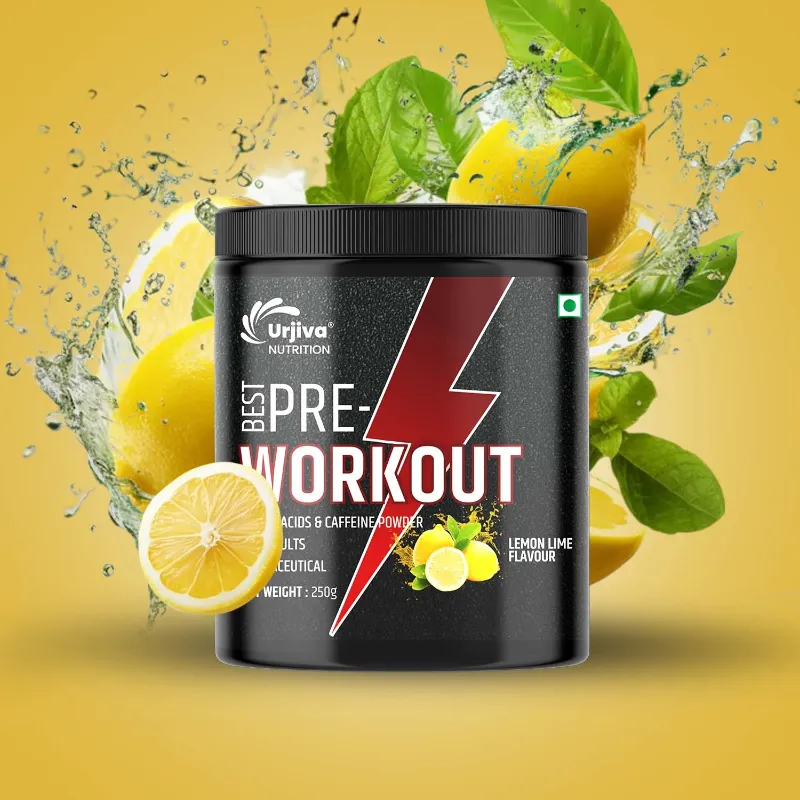
PRE WORKOUT (Lemon) 250 GRM
Product Description:Introducing Urjiva Nutrition Pre-Workout – Lemon Flavour, a power-packed perform...
₹1,392.00
Buy NowImpact of Pre Workout in the Fitness World

The increasing role of pre workout supplements within fitness culture signifies a large shift in training, recovery, goal setting, and overall fitness approach. From early adopters of the gym looking for an edge to the many people aligning their workflow with pre workout supplements, pre workouts have become a focal point in people's workout routines. Pre workout supplements have influenced much more than just performance though - they have influenced the supplement market, habits at the gym, and discussions about fitness in general - especially the mental aspect of preparing to train.
Why Pre Workout Became a Gym Essential
The boom of pre-workout as a fitness staple can be attributed to one simple promise to users — more energy and improved performance. As time went on, and user results became consistent across the board, pre workouts became a staple product in the gym bag of everyone from the beginner looking to make a change to the professional athlete.
Provides an extra jolt of energy and focus before exercise
- Improves workout consistency, especially on low-energy days
- Serves as a psychological trigger, as most athletes associate it with "getting in the zone"
- Provides a pre-workout structure (whether it be a physical or mental cleanse) that prepares you for your workout performance
With effects so wide-ranging, pre workouts became as common in gym bags as a water bottle and protein shaker.
The Role of Marketing and Fitness Influencers
Advertising tactics and the emergence of fitness influencers greatly influenced the large spike in pre workout consumption (prior to COVID-19 anyway). With the onset of the social media craze, supplement brands began to market via social platforms such as Instagram and Youtube, etc.
- The influencers featured visible demonstration gains, and were able to create aspirational content.
- They used sponsored athletes to endorse specific pre workout brands.
- They hosted "Pre workout challenges" and first-time reaction videos to create visibility.
- They created appeal through creative packaging, bold claims, and flavor variety.
The culture of visibility and aspiration helped pave the way for pre workouts to be thrust into the mainstream much quicker than what would have happened through mere word-of-mouth.
Innovations That Changed the Game: Clean Labels, Vegan Options, and More
As the fitness sector matured, so did the expectations of the users. They wanted more than just energy with their pre workout — they wanted quality, transparency, and alignment with their values.
Innovations that helped modernize pre workouts include:
- Clean label formulations without artificial colors or fillers
- Vegan and plant-based options to cater to dietary restrictions
- Ingredient transparency, including exact dosages
- Non-stimulant pre workouts for users who are sensitive to caffeine
These innovations reflect the supplement industry’s response to a more knowledgeable and wellness conscious consumer — taking pre workouts from simply functional boosters, to thoughtful fitness accessories.
FAQs
Q1 What is the real meaning of pre workout?
Pre workout refers to supplements taken before exercise to enhance energy, focus, and performance.
Q2 How have pre workouts changed over time?
The history of pre workout shows a shift from high-stimulant blends to cleaner, science-backed formulations.
Q3 Are old-school pre workouts still available?
Some versions of the first pre workout formulas still exist but with updated, safer ingredients.
Q4 What’s the difference between pre workout drink and energy drink?
A pre workout drink is designed for exercise performance, while energy drinks are general stimulants for alertness.
Q5 Can you use historical formulas of pre workout today?
Many early formulas are discontinued due to safety, but some modern versions are inspired by how long pre workout has been around.
Conclusion: Reflect on the Past to Power Your Future Workouts
The development of contemporary fitness culture is reflected in the intriguing history of pre-workout. These supplements have changed significantly from the original pre-workout formulas made with sugar and unrefined stimulants to the modern, scientifically supported blends. Knowing the history of pre-workout supplements—from underground bodybuilding in the 1980s to mainstream fitness in the 2000s—is essential for figuring out what works, what doesn't, and how to customize your own supplement regimen. You can make wise choices, stay away from risky or out-of-date methods, and select formulas that actually fit your objectives by thinking back on the early innovations and lessons learned. Pre-workout is a potent tool that has been developed over decades of research, experimentation, and advancement; it is more than just a scoop of energy. Make wiser, safer, and more efficient supplementation decisions based on the past to support your training.
Embrace the Journey of Pre Workout Evolution
Not only does learning about the origins of pre-workout provide a nostalgic trip, but it also demonstrates the advancements in sports nutrition. The transition from the gritty, highly stimulant mixtures of the 1980s to the clean, customized formulas of today is a reflection of shifting consumer demands, scientific discoveries, and evolving consumer consciousness. Understanding this change enables you to appreciate the creativity behind each scoop, regardless of your level of fitness experience.
Important observations:
- From underground gym culture, pre-workouts have made their way onto store shelves.
- Modern blends prioritize balanced performance and safety, whereas early blends prioritized raw energy.
The change reflects a greater focus on results, ingredient transparency, and wellness.
Make Informed Choices Based on Historical Insights
Making better decisions today can be aided by knowing how long pre-workout has existed and how it has evolved. We've learned the importance of cleaner, well-researched ingredients from past mistakes, like the excessive use of unregulated stimulants. You can choose supplements with confidence that complement your fitness regimens and health objectives if you know what worked, what didn't, and why.
Advice for choosing supplements more wisely:
- Steer clear of proprietary blends that conceal the dosages of ingredients.
- Seek out products that have undergone third-party testing and contain ingredients that have been clinically supported.
- Align your fitness requirements with particular pre-workout objectives, such as recovery, energy, endurance, or focus.
Utilize Both Tradition and Science to Help You Shape Your Supplement Use
Although the foundation was established by the first pre-workout formulas, science has since reshaped what constitutes effective supplementation. You get the best of both worlds when you combine the knowledge gained from decades of research with the latest findings. Due to their demonstrated advantages, ingredients like creatine, citrulline, and beta-alanine have replaced the reliance on guesswork in early formulas.
Shape Your Supplement Use with Both Tradition and Science
Enjoy the intensity of traditional high-energy blends, but make good use of them.
For long-lasting, secure results, rely on dosages and formulations supported by science.
Select supplements to help your body, not to overburden it.
You can improve your routine with purpose, safety, and long-lasting effects by embracing the innovation and tradition of pre-workout history.


 +91 63528 07487

 225, Orchid Plaza, Sama-Savli Rd,
behind mc donald's, Vemali,
Vadodara, Gujarat, India 390008
225, Orchid Plaza, Sama-Savli Rd,
behind mc donald's, Vemali,
Vadodara, Gujarat, India 390008